
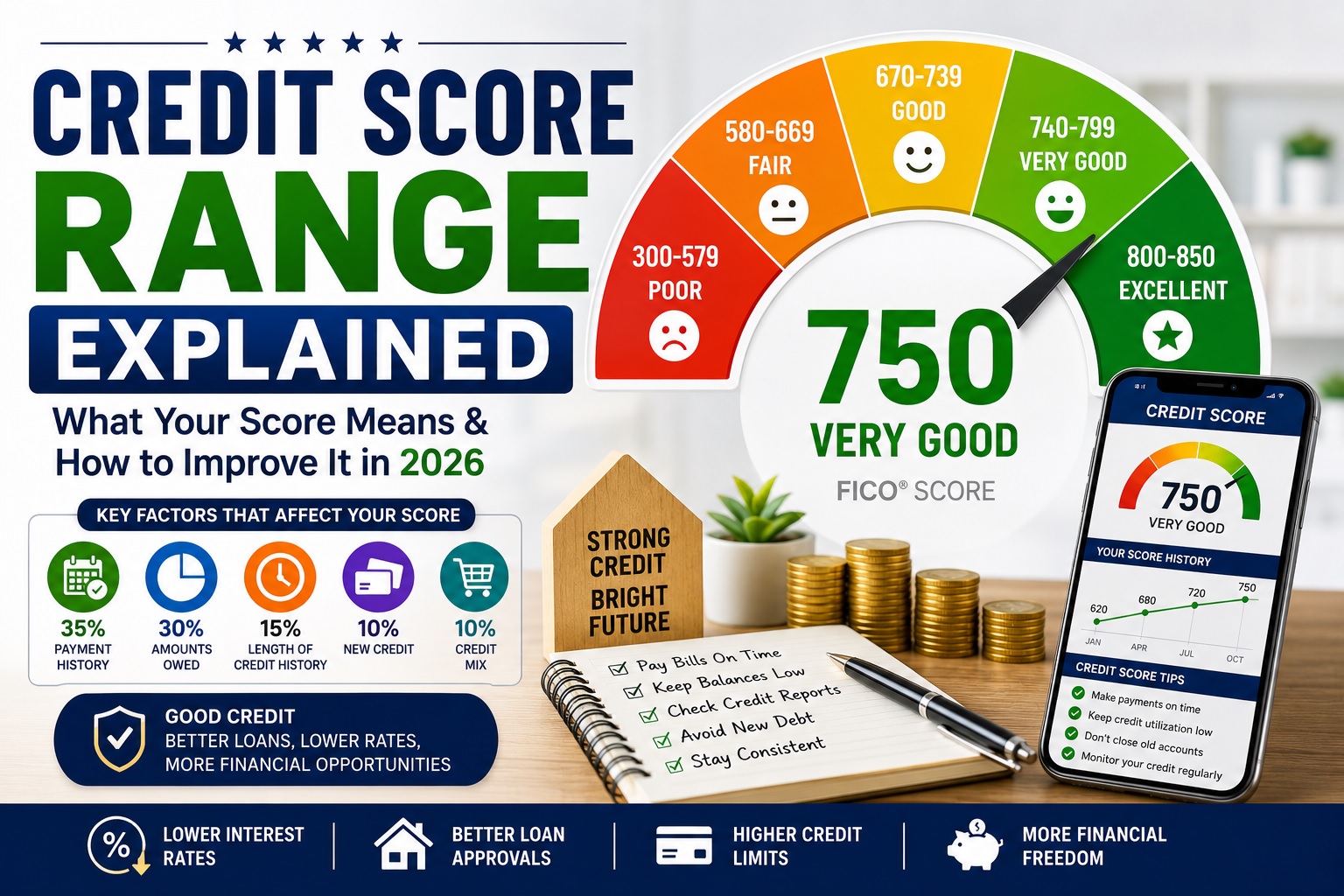
Credit Score Range is one of the most searched personal finance topics in the United States because credit scores influence many important financial decisions. Whether you apply for a credit card, auto loan, mortgage, apartment rental, or even certain jobs, your credit score can affect the outcome. Therefore, understanding credit score ranges is essential for anyone who wants to improve their financial future.
Moreover, lenders use credit scores to evaluate risk. As a result, people with higher scores often qualify for better interest rates, higher credit limits, and more favorable loan terms. Consequently, knowing where your score falls within the credit score range can help you make smarter financial decisions and set realistic goals for improvement.
Whether you are building credit for the first time or trying to improve an existing score, understanding the credit score range can help you take control of your financial health.
What Is a Credit Score?
A credit score is a three-digit number that represents your creditworthiness. It helps lenders estimate how likely you are to repay borrowed money responsibly.
Most lenders in the United States use scores from:
- FICO Score
- VantageScore
Although scoring models vary slightly, they generally use a range from 300 to 850.
Credit Score Range Breakdown
Most credit scores fall into the following categories:
| Credit Score | Rating |
|---|---|
| 300-579 | Poor |
| 580-669 | Fair |
| 670-739 | Good |
| 740-799 | Very Good |
| 800-850 | Excellent |
Each category affects borrowing opportunities differently.
Poor Credit Score Range (300-579)
A poor credit score often indicates significant credit problems. Common causes include:
- Missed payments
- Collections accounts
- Bankruptcies
- High credit utilization
Consequently, borrowers in this range may face:
- Higher interest rates
- Loan denials
- Lower credit limits
However, improvement remains possible through consistent financial habits.
Fair Credit Score Range (580-669)
The fair range often represents consumers rebuilding credit. People in this category may:
- Qualify for some loans
- Receive higher interest rates
- Have limited credit card options
Many borrowers begin seeing better lending opportunities once scores move above 670.
Good Credit Score Range (670-739)
A good credit score opens the door to many financial products. Benefits often include:
- Better loan approvals
- Lower borrowing costs
- Increased credit limits
- More credit card choices
As a result, many financial experts recommend targeting at least a good credit score.
Very Good Credit Score Range (740-799)
Borrowers in this range often enjoy excellent lending opportunities. Advantages may include:
- Lower APRs
- Better mortgage rates
- Premium credit card approvals
- Stronger negotiating power
Therefore, reaching this range can save thousands of dollars over time.
Excellent Credit Score Range (800-850)
Excellent credit represents the highest level of creditworthiness. Benefits often include:
- Best interest rates
- Premium financial products
- Easier approvals
- Higher credit limits
Although achieving an 850 score is not necessary, maintaining a score above 800 often provides maximum financial advantages.
What Factors Affect Credit Scores?
Several factors determine your score.
Payment History
Payment history usually carries the greatest weight. Therefore:
- Pay bills on time
- Avoid late payments
- Monitor account activity
Credit Utilization
Credit utilization measures how much available credit you use.
Example: Credit limit: $10,000 | Balance: $2,000
Utilization: 100002000×100=20%. A 20% utilization rate generally supports healthy credit scores.
Length of Credit History
Older accounts often benefit credit profiles. Consequently, keeping long-standing accounts open may help your score.
Credit Mix
Lenders like seeing responsible management of different account types. Examples include:
- Credit cards
- Auto loans
- Mortgages
- Personal loans
New Credit Applications
Multiple applications within a short period can temporarily reduce scores. Therefore, apply for credit only when necessary.
How to Improve Your Credit Score
Pay Every Bill on Time
Payment history remains the most important scoring factor.
Lower Credit Card Balances
Keeping utilization below 30% often improves scores.
Check Credit Reports
Review reports regularly for errors.
You can access free reports through:
Avoid Closing Old Accounts
Long credit history can support higher scores.
Limit New Applications
Fewer hard inquiries usually help maintain score stability.
Why Credit Scores Matter
Credit scores affect much more than loans.
They may influence:
- Mortgage approvals
- Auto loan rates
- Credit card offers
- Apartment rentals
- Insurance premiums
Consequently, maintaining a strong credit score can create significant long-term savings.
Common Credit Score Myths
Checking Your Score Hurts Credit
False. Checking your own score creates a soft inquiry and does not lower your score.
Carrying a Balance Improves Credit
False. Paying balances in full generally benefits your finances more.
Closing Cards Always Helps
False. Closing accounts may increase utilization and reduce average account age.
Helpful Credit Resources
For additional information, visit:
These resources provide credit education, monitoring tools, and score information.
Frequently Asked Questions
Most lenders consider scores between 670 and 739 good.
Yes. However, interest rates may be higher.
Improvement timelines vary. Many people see progress within several months of responsible credit use.
Most scoring models use 850 as the maximum score.
In many cases, yes. Lower balances often reduce utilization and support score growth.
Final Thoughts
Credit Score Range knowledge helps consumers make smarter borrowing decisions and understand where they stand financially. Moreover, understanding how credit scores work can help you improve approval odds, reduce interest costs, and access better financial opportunities.
Although building excellent credit takes time, consistent habits such as paying bills on time, reducing debt, and monitoring credit reports can produce significant results. Therefore, focusing on long-term credit health remains one of the best financial investments you can make.
At LearnWithVinod.com, our mission is simple: Learn, Earn, and Grow.