
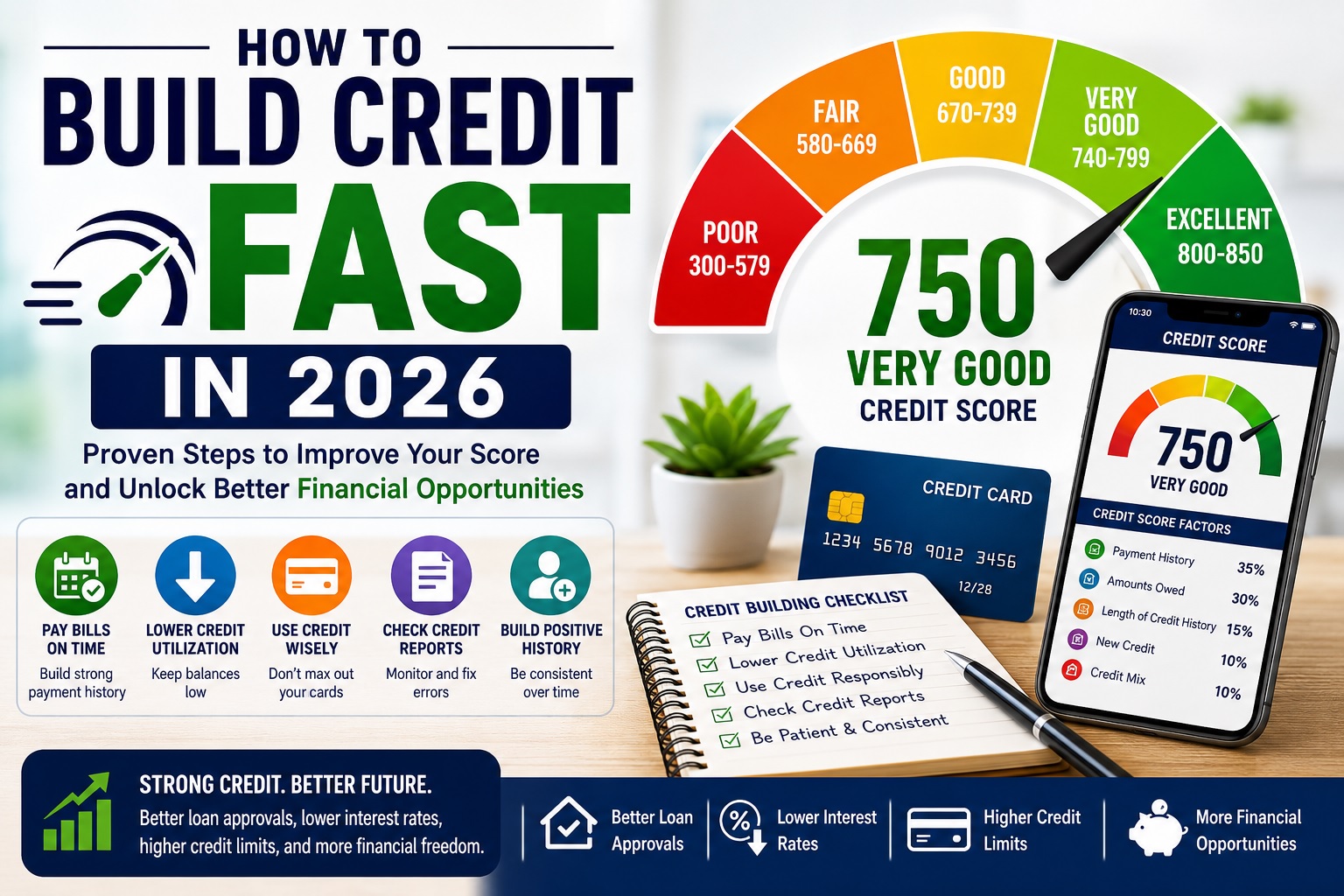
How to Build Credit Fast is one of the most searched personal finance topics in the United States because a strong credit score can open doors to better financial opportunities. Whether you want to qualify for a mortgage, secure an auto loan, obtain a credit card, or simply improve your financial profile, building credit quickly can help you reach those goals faster.
Moreover, lenders rely heavily on credit scores when evaluating borrowers. As a result, people with higher credit scores often receive lower interest rates, better loan terms, and increased approval odds. Consequently, understanding how to build credit fast can save thousands of dollars over time.
Whether you are starting from scratch or rebuilding after financial setbacks, these proven strategies can help you build credit faster in 2026.
Why Credit Scores Matter
Your credit score affects more than loan approvals. A strong score may help you:
- Qualify for better credit cards
- Obtain lower mortgage rates
- Secure auto loans with lower APRs
- Reduce insurance costs
- Improve rental application approvals
Therefore, improving your credit score should become a financial priority.
Check Your Credit Report First
Before improving your score, understand your current situation. Review your credit reports from:
- Equifax
- Experian
- TransUnion
You can access free reports through: Annual Credit Report
Look for:
- Reporting errors
- Incorrect balances
- Duplicate accounts
- Fraudulent activity
Consequently, correcting errors may provide a quick score improvement.
Related Article: Credit Score Range Explained
Pay Every Bill on Time
Payment history remains the most important credit scoring factor. Late payments can significantly reduce credit scores. Therefore:
- Set automatic payments
- Use payment reminders
- Pay at least the minimum amount due
Even one missed payment can affect your score for years.
Lower Your Credit Utilization
Credit utilization measures how much of your available credit you currently use.
Example: Credit limit: $5,000, Balance: $1,000
Utilization: 50001000×100=20%
Experts often recommend staying below 30%. However, keeping utilization below 10% may produce even stronger results.
Become an Authorized User
One of the fastest credit-building methods involves becoming an authorized user on someone else’s credit card. The primary cardholder should have:
- Excellent payment history
- Low utilization
- Long account age
Consequently, their positive account history may help strengthen your credit profile.
Get a Secured Credit Card
Secured credit cards remain one of the most effective tools for building credit. Popular options include:
These cards require a security deposit but often report activity to major credit bureaus. As a result, responsible use can improve scores steadily.
Use Credit Builder Loans
Credit builder loans help establish positive payment history. Unlike traditional loans:
- Funds remain secured during repayment
- Payments are reported to credit bureaus
- Savings accumulate throughout the loan term
Several financial institutions offer credit builder products designed specifically for credit improvement.
Keep Old Accounts Open
Credit age influences scoring models. Older accounts generally help strengthen your credit profile.
Therefore:
- Avoid closing long-standing accounts unnecessarily
- Keep older cards active with occasional small purchases
This strategy may improve average account age over time.
Limit New Credit Applications
Every hard inquiry can temporarily reduce your score. Therefore:
- Apply only when necessary
- Avoid multiple applications within short periods
- Research approval requirements beforehand
Consequently, you reduce unnecessary score fluctuations.
Diversify Your Credit Mix
Lenders like seeing responsible management across different account types. Examples include:
- Credit cards
- Auto loans
- Mortgages
- Personal loans
However, never borrow money solely to improve your credit mix. Instead, focus on managing existing accounts responsibly.
Pay Credit Card Balances More Frequently
Many consumers wait until the due date to make payments. However, paying balances multiple times per month can lower reported utilization. As a result:
- Utilization appears lower
- Scores may improve faster
- Debt remains easier to manage
Set Up Automatic Payments
Automation reduces missed-payment risk. Benefits include:
- Better payment consistency
- Lower stress
- Stronger payment history
Consequently, automation can protect your credit profile over the long term.
Monitor Your Credit Regularly
Credit monitoring helps identify:
- Fraud
- Errors
- Unauthorized accounts
Helpful resources include:
Regular monitoring allows faster problem resolution.
Common Credit-Building Mistakes
Missing Payments: Late payments can cause significant damage.
Maxing Out Credit Cards: High utilization often lowers scores.
Closing Old Accounts: Account closures may reduce average credit age.
Applying for Too Much Credit: Frequent inquiries may create negative signals.
Ignoring Credit Reports: Errors often go unnoticed without regular reviews.
How Long Does It Take to Build Credit?
Timelines vary depending on your starting point. Many people see improvement within:
- 3 months
- 6 months
- 12 months
However, significant improvements often require consistent habits over longer periods. Fortunately, even small changes can produce measurable progress.
Signs Your Credit Is Improving
Positive indicators include:
- Higher credit score
- Lower utilization
- Better loan offers
- Higher credit limits
- Improved approval odds
Monitoring these changes helps maintain motivation.
Frequently Asked Questions
Paying bills on time and reducing utilization often produce the fastest improvements.
Yes. Credit builder loans and certain reporting services may help.
Monthly monitoring is generally sufficient.
No. Personal credit checks create soft inquiries.
Yes. Some consumers see noticeable improvements within a few months.
Helpful Resources
For additional guidance, visit:
These resources provide trusted financial education and credit tools.
Final Thoughts
How to Build Credit Fast remains one of the most valuable personal finance topics because strong credit affects nearly every major financial decision. Fortunately, improving your credit score does not require complicated strategies. Instead, consistent habits such as paying bills on time, reducing credit utilization, monitoring reports, and using credit responsibly can produce significant results.
Moreover, building strong credit today can lead to lower borrowing costs, better financial opportunities, and greater financial freedom in the future.
At LearnWithVinod.com, our mission is simple: Learn, Earn, and Grow.