
In 2026, cybersecurity USA has become one of the most critical topics for individuals and businesses alike. With increasing online transactions, remote work, and digital innovation, protecting your data is no longer optional — it’s essential. Understanding cybersecurity helps Americans safeguard their finances, privacy, and reputation in a connected world.
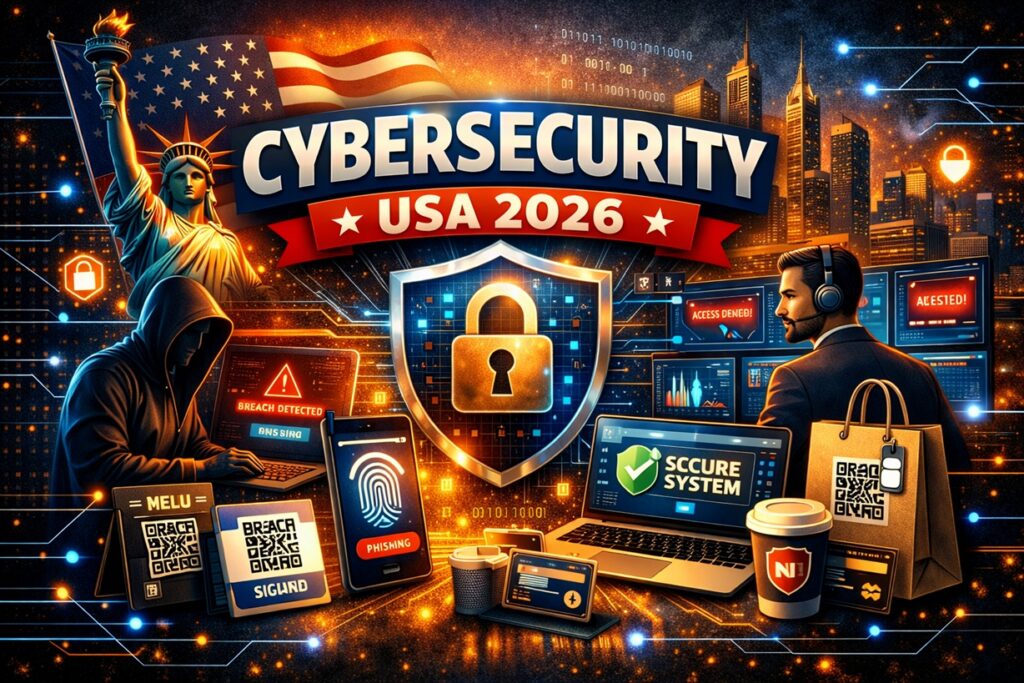
💡 Why Cybersecurity Matters in 2026
Cybercrime costs the U.S. economy billions each year. Transitioning to secure digital practices ensures safety and trust. From phishing scams to ransomware attacks, threats are evolving — but so are the defenses. Americans are now investing in stronger passwords, multi‑factor authentication, and AI‑powered protection tools.
👉 Outbound resource: U.S. Cybersecurity & Infrastructure Security Agency (CISA) (cisa.gov in Bing) (bing.com in Bing)
🛡️ Top Cybersecurity Strategies for Americans in 2026
1. Use Strong Passwords
Weak passwords remain the easiest way for hackers to access accounts. Transitioning to password managers like 1Password or Bitwarden ensures unique, encrypted credentials for every login. 👉 Outbound resource: Bitwarden Official Site
2. Enable Multi‑Factor Authentication (MFA)
MFA adds an extra layer of protection by requiring a second verification step. Transitioning to MFA for banking, email, and social media prevents unauthorized access even if passwords are compromised. 👉 Outbound resource: Microsoft Security MFA Guide
3. Update Software Regularly
Outdated software is a hacker’s playground. Transitioning to automatic updates ensures your devices stay protected against known vulnerabilities.
4. Use Secure Wi‑Fi Networks
Public Wi‑Fi can expose sensitive data. Transitioning to VPNs like NordVPN or ProtonVPN encrypts your connection and keeps your browsing private. 👉 Outbound resource: ProtonVPN Official Site
5. Install Reliable Antivirus Software
Modern antivirus tools use AI to detect threats in real time. Transitioning to trusted brands like Norton, McAfee, or Bitdefender ensures comprehensive protection. 👉 Outbound resource: Norton Security
6. Be Aware of Phishing Scams
Phishing emails look legitimate but steal your information. Transitioning to cautious email habits — verifying sender addresses and avoiding suspicious links — prevents data theft.
7. Secure Your Smart Devices
Smart homes are convenient but vulnerable. Transitioning to devices with built‑in encryption and regularly changing default passwords keeps your network safe.
8. Backup Data Frequently
Data loss can happen anytime. Transitioning to cloud backups like OneDrive or Google Drive ensures your files are recoverable after a cyberattack or hardware failure. 👉 Outbound resource: OneDrive Backup Guide
🧠 Cybersecurity for Businesses
American businesses face increasing cyber threats. Transitioning to proactive security measures protects assets and customer trust.
| Business Practice | Benefit |
|---|---|
| Employee Training | Reduces phishing and insider threats |
| Endpoint Protection | Secures all connected devices |
| Data Encryption | Protects sensitive information |
| Incident Response Plan | Ensures quick recovery after attacks |
| Regular Audits | Identifies vulnerabilities early |
👉 Outbound resource: National Institute of Standards and Technology (NIST) Cybersecurity Framework (nist.gov in Bing) (bing.com in Bing)
🔐 Cybersecurity Trends in the USA for 2026
- AI‑Driven Security — Artificial intelligence detects threats faster than humans.
- Zero‑Trust Architecture — Every access request is verified, reducing insider risks.
- Quantum Encryption — Next‑generation encryption protects against future quantum computing attacks.
- Cloud Security — As cloud adoption grows, securing data across platforms becomes vital.
- Cyber Insurance — Businesses invest in coverage to mitigate financial losses from breaches.
👉 Outbound resource: Forbes Cybersecurity Trends 2026 (forbes.com in Bing) (bing.com in Bing)
💼 Career Opportunities in Cybersecurity
Cybersecurity jobs in the USA are booming. Transitioning into this field offers high salaries and long‑term stability.
| Job Role | Average Salary (2026) | Growth Rate |
|---|---|---|
| Security Analyst | $115,000 | 30% |
| Ethical Hacker | $130,000 | 35% |
| Cybersecurity Engineer | $140,000 | 40% |
| Cloud Security Specialist | $125,000 | 32% |
| Chief Information Security Officer (CISO) | $180,000 | 25% |
👉 Outbound resource: U.S. Bureau of Labor Statistics – Information Security Jobs (bls.gov in Bing) (bing.com in Bing)
🌍 Future of Cybersecurity in the USA
By 2026, cybersecurity will be integrated into every aspect of American life — from banking to healthcare. Transitioning to secure digital ecosystems ensures privacy and resilience. The U.S. government and private sector continue to collaborate on national defense against cyber threats.
🌟 Final Thoughts
The cybersecurity USA movement is about empowerment, awareness, and protection. Transitioning into secure habits and technologies ensures a safer digital future for everyone. Whether you’re managing personal data or running a business, cybersecurity is your strongest investment in 2026.
❓ FAQ Section
Cybersecurity is the practice of protecting computers, networks, and data from unauthorized access or attacks.
It protects individuals and businesses from financial loss, identity theft, and data breaches.
Use strong passwords, enable MFA, update software, and avoid suspicious links.
Phishing, ransomware, and data breaches remain top concerns.
Yes, cybersecurity is one of the fastest‑growing career fields in the USA.