Table of Contents
- What the New Inflation Numbers Say
- Your Personal Inflation Rate Is Probably Not 3.6%
- A 10-minute personal inflation check
- 7 Ways to Protect Your Budget From Inflation Before the Holidays
- 1. Attack fuel costs first
- 2. Book holiday travel now, or rethink it
- 3. Lock in a fixed gift budget
- 4. Cut restaurant spending before groceries
- 5. Prepare for winter energy bills
- 6. Make your savings beat inflation
- 7. Pay down variable-rate debt
- What Not to Do
- What Happens Next With Inflation?
- Final Thoughts
- Frequently Asked Questions
- Sources
Inflation just climbed to 3.6%. That is the September reading of the Personal Consumption Expenditures (PCE) price index, the Federal Reserve’s preferred inflation measure, released on October 29, 2026. It is up from 3.4% in August. But that single number hides a much bigger story: gas prices are up about 34% from a year ago, airfares about 22%, while groceries are up less than 2%. To protect your budget before the holidays, you need to know where prices are actually rising. This guide shows you, then gives seven practical ways to fight back.
What the New Inflation Numbers Say
Two government reports came out in October, and they tell the same story:
| Measure | September 2026 | August 2026 |
|---|---|---|
| PCE inflation (Fed’s preferred gauge) | 3.6% | 3.4% |
| Consumer Price Index (CPI) | 3.7% | 3.4% |
| Core CPI (without food and energy) | 2.6% | 2.4% |
The gap between the headline and core numbers tells you energy is doing most of the damage. Higher oil prices linked to the war with Iran pushed gasoline up 9.1% in September alone, and that one item made up more than half of the month’s price increase.
Households are feeling it. In September, Americans spent $113 billion more than in August, but after adjusting for higher prices they bought almost exactly the same amount of stuff. Real disposable income fell 0.3%, and the personal saving rate dropped from 4.1% to 3.8%. In plain words: people are paying more, getting the same, and saving less.
Your Personal Inflation Rate Is Probably Not 3.6%
The official rate is an average across everything Americans buy. Your own inflation depends on what you buy. Here is how different categories changed over the year to September 2026:

| Category | 12-month change | Who feels it most |
|---|---|---|
| Gasoline | about +34% | Long commutes, rural drivers, gig drivers |
| Airline fares | +22.4% | Holiday travelers |
| All energy | +20.4% | Everyone with a car or utility bill |
| Restaurants and takeout | +3.5% | People who eat out often |
| Rent and housing (shelter) | +3.2% | Renters facing renewals |
| Groceries (food at home) | +1.8% | Everyone, but rising slowly |
So a family that drives a lot and plans to fly home for the holidays may be facing real inflation well above 3.6%. A family that mostly cooks at home and works remotely may be below it. That difference should shape where you cut first.
Older adults on fixed incomes, rural families who drive long distances and people who rent are usually hit hardest, because fuel, utilities and rent make up a bigger share of their spending. Higher-income households that eat out and travel more feel airfare and restaurant inflation more. Knowing which group you fall into tells you where to focus.
A 10-minute personal inflation check
- Pull your bank and card statements for September 2025 and September 2026.
- Add up spending on fuel, groceries, eating out, utilities and subscriptions for each month.
- Compare. The categories with the biggest jumps are where the steps below will save you the most.
7 Ways to Protect Your Budget From Inflation Before the Holidays
1. Attack fuel costs first
Gas is the biggest driver of today’s price increases, so even small changes pay off.
- Use a gas price app and fill up at the cheapest station on your normal route.
- Join a warehouse club or grocery fuel-rewards program if you already shop there.
- Combine errands into one trip and check your tire pressure; underinflated tires waste fuel.
- Use a credit card that pays extra cash back on gas, but only if you pay it in full.
2. Book holiday travel now, or rethink it
With airfares up more than 20%, waiting rarely helps. Compare nearby airports, fly on Tuesday or Wednesday, and consider driving if you can split gas with others. For some families, hosting a video call and mailing gifts early costs far less than a $1,500 round of tickets.
3. Lock in a fixed gift budget
Rising prices make it easy to overspend without noticing, because the same list of gifts costs more. Set a number before you shop and pay with money you have already saved. Our $500 holiday gift budget plan shows exactly how.
4. Cut restaurant spending before groceries
Restaurant prices are rising nearly twice as fast as grocery prices. Swapping two takeout meals a week for home-cooked meals can save a family of four $100 or more a month. Plan holiday meals around store-brand staples and buy non-perishables early when they go on sale.

5. Prepare for winter energy bills
Energy prices are up sharply, and heating season is starting. Ask your utility about budget billing, which spreads costs evenly across the year so a cold January does not shock your budget. Seal drafty windows and doors, lower the thermostat a few degrees at night, and check whether you qualify for the Low Income Home Energy Assistance Program (LIHEAP) in your state.
6. Make your savings beat inflation
If your savings earn 0.37%, the national average, inflation of 3.6% is shrinking your money by more than 3% a year. Top online savings accounts pay around 4%, enough to stay ahead. See our list of the best online banks in the USA for 2026. For money you will not need for a few years, Series I savings bonds and Treasury Inflation-Protected Securities (TIPS) are designed to keep pace with rising prices; you can learn about them at TreasuryDirect.
7. Pay down variable-rate debt
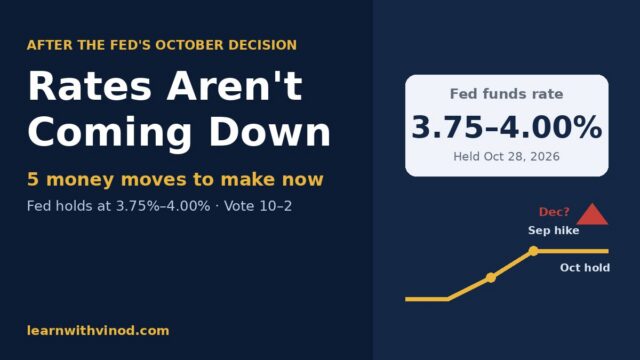
Stubborn price growth keeps interest rates high. The Fed held rates at 3.75%–4.00% in October, and many economists expect another hike in December. That makes credit card balances even more expensive. Put any extra money toward your highest-rate card first. Our guide Fed Interest Rates Aren’t Coming Down explains why.
What Not to Do
- Don’t stock up on things you won’t use. Panic buying wastes money and space.
- Don’t use buy now, pay later to keep up with higher prices. It only pushes the problem into next year.
- Don’t stop retirement contributions unless you truly must. Skipping a few months now can cost much more later.
- Don’t ignore small subscriptions. Many raised prices this year. Cancel the ones you don’t use.
What Happens Next With Inflation?
The next Consumer Price Index report, for October, is due on November 10, 2026. If oil prices stay high, price growth could stay above 3% into 2027. If the conflict in the Gulf cools and oil falls, gasoline could ease quickly, which would bring the headline number down. Either way, the Fed has said it wants inflation back at 2%, so borrowing costs are likely to stay high for a while. You can follow the official data on the Bureau of Labor Statistics CPI page.
One bright spot: Social Security and SSI benefits rise 3.6% in January 2027, which roughly matches today’s price growth.

Final Thoughts
Inflation at 3.6% is not a crisis, but it is uneven, and it is hitting fuel, travel and energy hardest right before the most expensive time of year. Check your own spending, cut where prices are rising fastest, set a firm holiday budget and make sure your savings earn more than inflation takes away. For more practical guides, visit our Personal Finance section.
Disclaimer: This article is for general information only and is not financial advice. Inflation figures are from the Bureau of Economic Analysis and Bureau of Labor Statistics for September 2026 and may be revised. Savings estimates are examples.
Frequently Asked Questions
What is the current inflation rate in the US?
PCE inflation, the Federal Reserve’s preferred measure, was 3.6% for the 12 months to September 2026, up from 3.4% in August. The Consumer Price Index rose 3.7% over the same period.
Why is inflation rising in 2026?
Mostly energy. Higher oil prices pushed gasoline up about 34% over the year to September 2026, and gasoline alone made up more than half of September’s price increase. Core CPI, which excludes food and energy, was 2.6%.
Is inflation hitting groceries?
Less than many people think. Food at home rose 1.8% over the year to September 2026, while restaurant meals rose 3.5%.
How can I protect my savings from inflation?
Keep emergency savings in a high-yield account paying around 4% instead of the 0.37% national average. For money you won’t need for a few years, Series I savings bonds and TIPS are designed to keep pace with inflation.
When is the next inflation report?
The October 2026 Consumer Price Index report is scheduled for November 10, 2026.
Will Social Security keep up with inflation?
Social Security and SSI benefits rise 3.6% starting in January 2027, which roughly matches current PCE inflation.
Sources
- BLS – Consumer Price Index, September 2026 (released Oct 14, 2026)
- BLS TED – Gasoline prices up 34.2% over the year ended September 2026
- CNBC – PCE inflation report, September 2026 (Oct 29, 2026)
- NCH Stats – US inflation in September 2026 (PCE, income, saving rate)
- TreasuryDirect – I bonds and TIPS
- BLS – Consumer Price Index home