
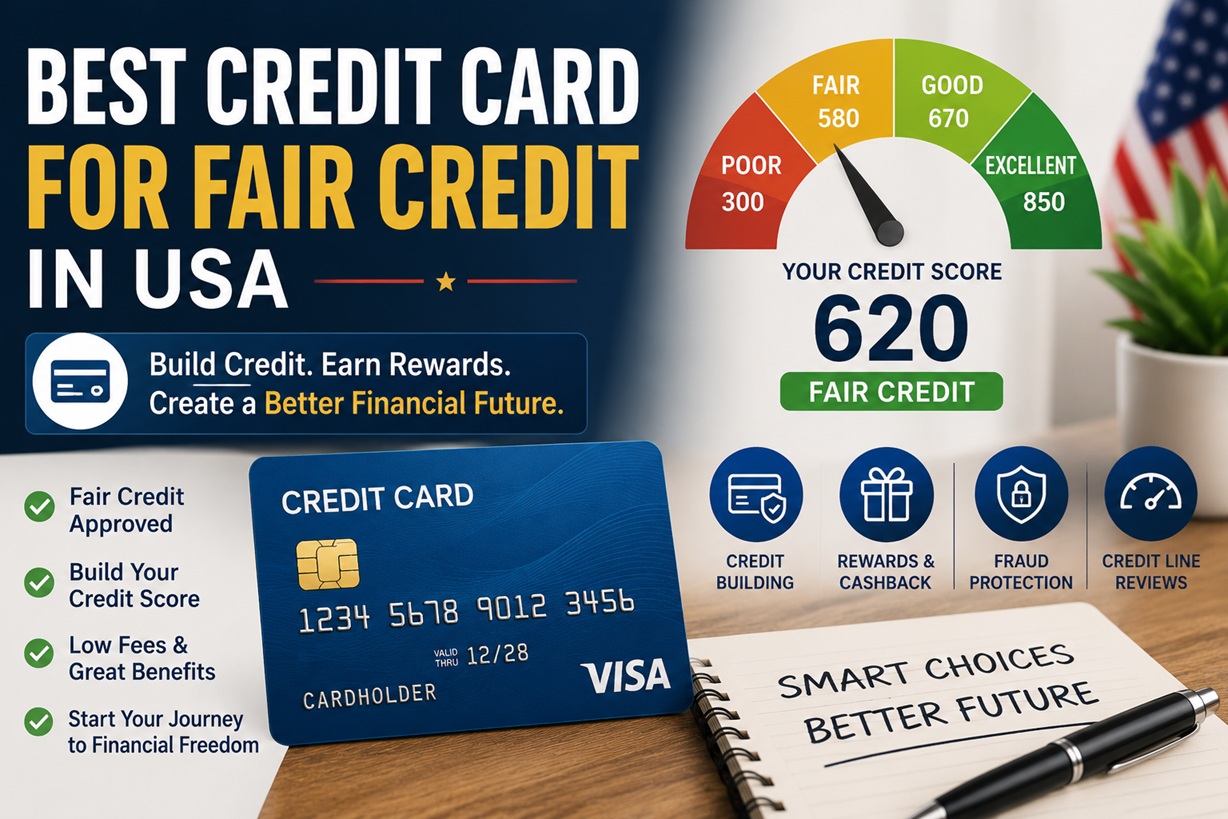
Best Credit Card for Fair Credit in USA is a popular search topic because millions of Americans want to improve their credit while still accessing useful financial tools. If your credit score falls between roughly 580 and 669, lenders usually classify it as fair credit. Although approval can feel more difficult at this stage, several credit card companies now offer products designed specifically for fair-credit borrowers.
Moreover, the right card can help you rebuild your credit score, increase your available credit, and create healthier financial habits over time. Some cards even offer cashback rewards, fraud protection, mobile banking tools, and automatic credit line reviews. Consequently, fair-credit consumers now have far more options than they did a few years ago.
What Is Fair Credit?
Most lenders use credit score ranges to evaluate financial risk.
Generally:
- Excellent Credit: 800+
- Very Good Credit: 740–799
- Good Credit: 670–739
- Fair Credit: 580–669
- Poor Credit: Below 580
Although fair credit may limit some premium card approvals, many banks still offer strong options with reasonable terms.
Related Articles: Best Credit Card for Students
Why Choosing the Right Card Matters
The right credit card can help you:
- Improve your credit score
- Build payment history
- Increase available credit
- Earn cashback rewards
- Reduce credit utilization
Therefore, selecting the correct card is an important financial decision.
Best Credit Cards for Fair Credit in 2026
Capital One Platinum Credit Card
The Capital One Platinum Credit Card remains one of the most popular cards for fair-credit borrowers.
Key Benefits
- No annual fee
- Automatic credit line reviews
- Fraud protection
- Mobile banking features
This card focuses more on credit building than rewards. However, responsible usage can improve approval odds for better cards later.
Discover it Secured Credit Card
The Discover it Secured Card combines credit building with cashback rewards.
Key Benefits
- Cashback rewards
- Reports to major credit bureaus
- Potential upgrade path
- No annual fee
Many beginners choose this card because it offers stronger rewards compared to traditional secured cards.
Capital One QuicksilverOne Rewards
The Capital One QuicksilverOne Rewards targets consumers with fair credit who want cashback rewards.
Key Benefits
- Flat-rate cashback
- Credit monitoring tools
- Fraud alerts
- Credit-building opportunities
Although the card charges an annual fee, many users value the unlimited cashback program.
Petal 2 Visa Credit Card
The Petal 2 Visa Credit Card uses alternative financial data during the approval process.
Key Benefits
- No annual fee
- Cashback rewards
- No security deposit
- Helpful budgeting tools
As a result, some applicants with limited credit history may qualify more easily.
Mission Lane Visa Credit Card
The Mission Lane Visa Credit Card focuses heavily on credit improvement.
Key Benefits
- Fast application process
- Credit monitoring
- Mobile account management
- Reports to all major bureaus
This card appeals to borrowers who want straightforward credit-building features.
Secured vs Unsecured Credit Cards
Many fair-credit borrowers compare secured and unsecured credit cards before applying.
Secured Credit Cards
Secured cards require a refundable security deposit.
Advantages
- Easier approval
- Credit-building opportunities
- Lower risk for lenders
Disadvantages
- Requires upfront deposit
- Usually lower credit limits
Unsecured Credit Cards
Unsecured cards do not require a deposit.
Advantages
- No security deposit
- More rewards opportunities
- Greater convenience
Disadvantages
- Higher approval requirements
- Sometimes higher interest rates
Both options can help improve credit when used responsibly.
How to Improve Fair Credit Faster
Pay Bills on Time
Payment history strongly affects your credit score. Therefore, on-time payments remain essential.
Keep Credit Utilization Low
Experts often recommend keeping utilization below 30%.
Avoid Too Many Applications
Frequent applications can temporarily reduce your score.
Monitor Your Credit Reports
Regular monitoring helps identify mistakes or fraudulent activity.
You can access free reports at:
Common Mistakes to Avoid
Carrying Large Balances
High balances increase utilization and may lower your score.
Missing Payments
Late payments can remain on credit reports for years.
Closing Old Accounts
Older accounts help strengthen credit history length.
Applying for Too Many Cards
Multiple applications within a short period may hurt approval odds.
Fair Credit and Interest Rates
Borrowers with fair credit often receive higher interest rates compared to applicants with excellent credit.
Consequently, paying balances in full each month can help avoid unnecessary interest charges.
Can Fair Credit Become Good Credit?
Yes. Many consumers improve fair credit significantly within 12 to 24 months by:
- Making on-time payments
- Reducing debt
- Monitoring reports
- Using credit responsibly
As your score improves, you may qualify for:
- Better rewards cards
- Lower loan rates
- Higher credit limits
- Premium travel cards
Helpful Credit Resources
Readers who want additional credit education can explore trusted resources such as:
These websites provide credit education, monitoring tools, and financial guidance.
Frequently Asked Questions
Most fair-credit cards accept applicants with scores between 580 and 669.
Yes. Several cards now offer cashback rewards for fair-credit borrowers.
Secured cards work well for rebuilding damaged credit or establishing new credit history.
Many consumers see improvement within several months when using credit responsibly.
Hard inquiries may slightly reduce your score temporarily.
Final Thoughts
Best Credit Card for Fair Credit in USA remains an important topic because millions of Americans want practical ways to improve their financial future. Fortunately, many banks now offer credit cards that support credit building while also providing rewards and modern financial tools.
Moreover, responsible credit usage can open the door to lower interest rates, better loan approvals, and stronger financial opportunities over time.
Whether you choose a secured card, cashback rewards card, or beginner-friendly unsecured option, consistent payments and smart financial habits remain the key to long-term success.
At LearnWithVinod.com, our mission is simple: Learn, Earn, and Grow.