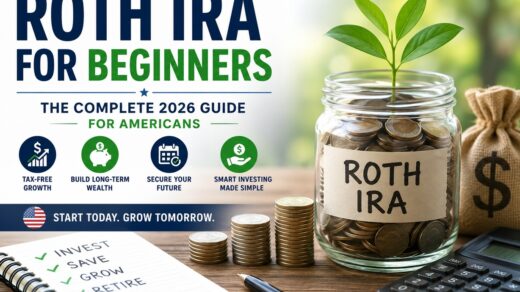
In 2026, retirement planning USA has become one of the most important financial priorities for Americans. With rising living costs, longer life expectancy, and evolving tax laws, planning for retirement early ensures comfort, stability, and peace of mind. Whether you’re in your 20s or nearing retirement, smart planning today can secure your tomorrow.

💡 Why Retirement Planning Matters in 2026
Retirement isn’t just about stopping work — it’s about maintaining freedom and financial independence. Transitioning from active income to passive sources requires foresight and discipline. Americans are now focusing on diversified portfolios, tax‑advantaged accounts, and inflation‑proof strategies to protect their savings.
👉 Outbound resource: U.S. Department of Labor – Retirement and Pension Plans (dol.gov in Bing)
🏦 Top Retirement Planning Strategies for Americans in 2026
1. Maximize 401(k) Contributions
A 401(k) remains one of the most powerful retirement tools. In 2026, contribution limits have increased, allowing Americans to save more tax‑deferred income. Transitioning to automatic contributions ensures consistency and employer matching benefits. 👉 Outbound resource: IRS 401(k) Contribution Limits (irs.gov in Bing) (bing.com in Bing)
2. Open a Roth IRA
Roth IRAs offer tax‑free growth and withdrawals in retirement. Transitioning into Roth accounts early helps maximize compounding benefits. In 2026, income limits have expanded, making Roth IRAs accessible to more Americans. 👉 Outbound resource: Fidelity Roth IRA Guide (fidelity.com in Bing)
3. Diversify Investments
A balanced portfolio of stocks, bonds, and real estate reduces risk and increases long‑term returns. Transitioning into index funds and ETFs ensures steady growth while minimizing management fees.
4. Build Passive Income Streams
Passive income sources like dividends, rental properties, and digital assets can supplement retirement savings. Transitioning into these streams early creates a cushion for future expenses. 👉 Outbound resource: Investopedia Passive Income Guide (investopedia.com in Bing)
5. Use Health Savings Accounts (HSAs)
HSAs provide triple tax benefits — contributions are tax‑deductible, growth is tax‑free, and withdrawals for medical expenses are tax‑exempt. Transitioning into HSAs helps cover healthcare costs in retirement. 👉 Outbound resource: HealthCare.gov HSA Overview (healthcare.gov in Bing)
6. Plan for Social Security
Understanding Social Security benefits is crucial. Transitioning to delayed claiming (after age 67) increases monthly payouts. Americans should regularly check their Social Security statements to estimate future income. 👉 Outbound resource: Social Security Administration
7. Consider Annuities
Annuities provide guaranteed income for life. Transitioning a portion of savings into annuities ensures stability even during market downturns.
8. Reduce Debt Before Retirement
Paying off high‑interest debt before retirement frees up cash flow. Transitioning to a debt‑free lifestyle ensures peace of mind and financial flexibility.
9. Estimate Retirement Expenses
Understanding future costs — housing, healthcare, travel — helps create realistic savings goals. Transitioning into detailed budgeting tools ensures accuracy and preparedness. 👉 Outbound resource: AARP Retirement Calculator (aarp.org in Bing)
10. Work with a Financial Advisor
Professional guidance can optimize your retirement plan. Transitioning to certified advisors ensures tax efficiency, risk management, and personalized strategies.
📊 Example Retirement Portfolio for 2026
| Asset Type | Suggested Allocation | Purpose |
|---|---|---|
| 401(k) | 35% | Tax‑deferred growth |
| Roth IRA | 25% | Tax‑free withdrawals |
| Stocks & ETFs | 20% | Long‑term growth |
| Bonds | 10% | Stability |
| Real Estate | 10% | Inflation hedge |
💰 Tax‑Efficient Retirement Planning
To maximize returns, Americans should focus on tax‑efficient strategies:
- Use tax‑advantaged accounts — 401(k), Roth IRA, and HSA.
- Rebalance annually — adjust allocations based on market performance.
- Avoid early withdrawals — penalties reduce long‑term growth.
- Plan charitable giving — donations can reduce taxable income.
👉 Outbound resource: IRS Retirement Planning Resources (irs.gov in Bing)
🌟 Final Thoughts
The best retirement planning USA strategies for 2026 combine discipline, diversification, and foresight. Transitioning into tax‑advantaged accounts, passive income streams, and debt‑free living ensures a secure and fulfilling retirement. Remember, the earlier you start, the more freedom you’ll enjoy later.
❓ FAQ Section
The best time is now — starting in your 20s or 30s maximizes compounding benefits.
Aim for 15–20% of your annual income, adjusting based on lifestyle and goals.
Both have advantages. Roth IRAs offer tax‑free withdrawals, while 401(k)s provide employer matches.
Diversify into real estate, dividend stocks, and inflation‑linked bonds.
Yes, professional advice ensures tax efficiency and personalized strategies.