
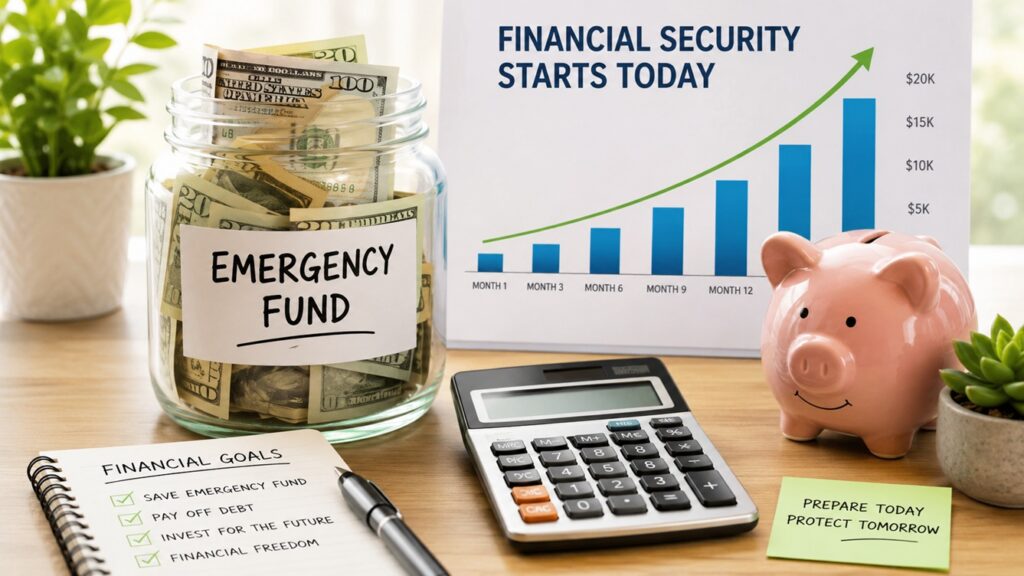
An emergency fund 101 is the foundation of a strong financial life. In 2026, with inflation, job market changes, and unexpected expenses affecting millions of Americans, having dedicated emergency savings is more important than ever. Whether you are paying off debt, building credit, or investing for retirement, an emergency fund protects your progress and helps you avoid expensive borrowing.
At Learn with Vinod – Learn. Earn. and Grow. – we focus on practical financial strategies that help everyday Americans make smarter money decisions. This guide explains how much you should save, where to keep your money, and how to build your emergency fund faster.
What Is an Emergency Fund 101?
An emergency fund is money set aside specifically for unexpected expenses. It is not for vacations, holiday shopping, or impulse purchases. Instead, it is reserved for true financial emergencies such as medical bills, job loss, urgent home repairs, or major car repairs.
Without emergency savings, many people rely on credit cards or personal loans. Unfortunately, that often leads to high interest charges and long-term debt. By contrast, a well-funded emergency account gives you flexibility and peace of mind.
Why Emergency Funds Matter More in 2026
The cost of living in the United States continues to rise. Rent, groceries, insurance premiums, and healthcare expenses remain elevated in many regions. At the same time, economic uncertainty can affect job stability. As a result, even a small emergency can disrupt your budget.
A strong emergency fund reduces stress because you know you can handle unexpected costs. It also prevents you from withdrawing money from your 401(k) or Roth IRA, which can damage your long-term retirement goals.
How Much Money Should You Save?
Most financial experts recommend saving three to six months of essential living expenses. Essential expenses typically include housing, utilities, food, transportation, insurance, and minimum debt payments.
For example, if your core monthly expenses total $3,000, your ideal emergency fund may range from $9,000 to $18,000.
However, not everyone needs the same amount. If your income is stable and you work in a secure field, three months may be sufficient. If you are self-employed, support a family, or work in a volatile industry, six to twelve months of expenses may be more appropriate.
Start Small and Build Consistently
The size of your final goal should not stop you from starting. Your first milestone can be $500. Next, aim for $1,000. After that, work toward one month of expenses, then three months, and eventually six months.
Small, consistent contributions create meaningful results over time. Saving $25 to $50 per week can build a solid safety net faster than many people expect.
Where Should You Keep Your Emergency Fund 101?
Your emergency savings should be safe, liquid, and easy to access. For most Americans, the best place is a high-yield savings account. These accounts often pay significantly more interest than traditional savings accounts while still allowing quick access to your cash.
Federal Deposit Insurance Corporation (FDIC) — Checking deserves
Online banks frequently offer competitive rates and low fees. Keeping your emergency fund separate from your checking account also reduces the temptation to spend it.
Benefits of High-Yield Savings Accounts
A high-yield savings account allows your emergency fund to earn interest while remaining protected and accessible. Because the money is not exposed to stock market volatility, you can withdraw it when needed without worrying about short-term losses.
Also Read: Best Yeild Saving Accounts
This makes high-yield savings accounts an ideal choice for emergency reserves.
How to Calculate Your Emergency Fund Target
Begin by listing your essential monthly expenses:
- Housing
- Utilities
- Groceries
- Transportation
- Insurance
- Minimum debt payments
- Childcare
- Healthcare
Add those expenses together and multiply the total by three to six. The result is your personalized emergency fund goal.
Who Needs a Larger Emergency Fund?
Certain groups benefit from keeping a larger cash reserve. Freelancers and business owners often experience irregular income. Single-income households may face greater risk if one paycheck supports the entire family. People with chronic health costs or dependents may also need additional savings.
A larger emergency fund provides more flexibility during uncertain periods.
How to Build Your Emergency Fund Fast
First, automate your savings. Setting up recurring transfers removes the need to make a decision each month. Second, direct tax refunds, bonuses, and side hustle income into your emergency account. Third, reduce discretionary spending temporarily and channel the difference into savings.
Selling unused items and taking on short-term freelance work can also accelerate progress.
Should You Save or Pay Off Debt First?
The best approach is often to do both. Build a starter emergency fund of $500 to $1,000 while continuing minimum debt payments. Once you have this cushion, you can focus more aggressively on high-interest debt such as credit cards.
After eliminating expensive debt, redirect those payments into your emergency fund.
When Should You Use Your Emergency Fund?
Use your emergency fund 101 only for genuine, unexpected needs. Appropriate uses include medical bills, urgent repairs, job loss, and essential travel for family emergencies.
Routine expenses and planned purchases should come from your regular budget, not your emergency savings.
How to Rebuild After Using Your Savings
If you withdraw money from your emergency fund, begin replenishing it as soon as possible. Even modest weekly deposits can restore your balance over time. The goal is not to avoid using the fund; it is to ensure that you rebuild it after the emergency passes.
Common Mistakes to Avoid
One common mistake is keeping too little cash and relying on credit cards. Another is investing emergency funds in volatile assets such as stocks. Some people also use their emergency savings for vacations or other non-essential purchases.
Maintaining clear boundaries helps protect your financial security.
How an Emergency Fund Supports Wealth Building
Emergency savings create stability. When unexpected costs arise, you can cover them without interrupting your investment plan. This allows you to continue contributing to retirement accounts and other long-term goals.
In other words, an emergency fund is not just defensive. It is a critical part of wealth building.
A Real-World Example
Imagine Sarah, a teacher in Texas, who spends about $3,500 each month on essential expenses. Her target emergency fund is $10,500 to $21,000. She starts by saving $200 per month and deposits her annual tax refund into a high-yield savings account. Within two years, she builds a robust safety net. When her car requires a major repair, she pays cash and avoids adding credit card debt.
Final Thoughts
An emergency fund is one of the smartest financial decisions Americans can make in 2026. It protects you from unexpected expenses, reduces stress, and prevents debt from derailing your progress. Whether your goal is $1,000 or six months of expenses, the most important step is to begin.
Consistency matters more than perfection. Start with what you can afford, automate your savings, and let time do the rest.
At Learn with Vinod – Learn. Earn. and Grow. – our mission is to help you build lasting financial confidence, one smart decision at a time.
Frequently Asked Questions
Most Americans should aim for three to six months of essential living expenses.
A high-yield savings account is usually the best option because it offers safety, liquidity, and competitive interest.
Generally, no. Emergency funds should remain in stable, easily accessible accounts.
Yes. Many people start with a small cushion and then balance saving with debt repayment.
Unexpected expenses such as medical bills, job loss, and urgent home or car repairs.